
Our photography tour of Rajasthan, India's Land of Kings, provides a treasure trove of visual delights. In Mandawa, the city is well known for the frescos and beautiful havelis and Bikaner is known for its beautiful fort and local life.
Jaisalmer, rising from the Thar Desert, is a photographer's dream with its golden sandstone architecture. The intricate facades of havelis and the majestic Jaisalmer Fort, especially during sunrise and sunset, create breathtaking compositions. The surrounding sand dunes offer classic desert landscapes and opportunities for capturing nomadic life and camel caravans.
Jodhpur, the Blue City, is dominated by the imposing Mehrangarh Fort, offering panoramic views of the blue-washed old town below.
In contrast, Ranakpur provides a serene setting with its exquisitely carved Jain temples. The play of light and shadow on the intricate marble pillars and domes offers endless possibilities for detail and abstract shots. Udaipur, the City of Lakes, presents a romantic backdrop with its shimmering lakes, palatial architecture, and ornate ghats.
In Jaipur, the Pink City, the Hawa Mahal and Amber Fort provide stunning architectural subjects, while bustling bazaars offer vibrant photographic opportunities.
Throughout Rajasthan, we can capture the region's rich cultural heritage through portraits of locals in traditional attire, colourful festivals, and ancient crafts. From the opulent palaces to remote villages, the diverse landscapes, vibrant colours, and rich traditions make it a captivating destination to experience the majesty of India's royal state.
Your hosts Atik Ahmed and Susan Moss
Tour Start: March 12 – 24 2027
Tour Cost: Single AU$ 10,700
Twin Share AU$ 10,200 per person
Singapore Airlines flight from Perth will arrive at 6am and in good time for the start of the tour. Should you wish to arrive a day earlier to relax, as Susan will be doing, please contact us, for Atik to arrange a night’s accommodation at the hotel approx AU$270 at your cost.
On arrival you will met by host Atik at the airport. We will drive to Mandawa, a compact little town in the Shekhawati region. Check into the hotel. In the afternoon we will visit Havelies (old mansions) with beautiful frescoes. The medieval fort of Mandawa gradually rises on the horizon like a mirage. A painted arched gateway adorned with Lord Krishna and his cows leads to the bazaar. Later in the evening we are going to visit the local market.
In the morning drive to Bikaner – Vale of Serenity, upon arrival check into the hotel. This afternoon enjoy a city tour covering Junagarh Fort – constructed between 1588 and 1593 by Raja Rai Singh, fort has a 986 metre long wall with 37 bastions and two entrances. The one of most beautiful forts in Rajasthan. BhandShah Jain Temple – The 15th century Jain temple, is the most important of this temple complex, Rampuriya havelis are the home of merchants and beautiful Local market. We will meet the person who has claimed to have the longest moustache.
This morning, we will drive to Jaisalmer, allowing time as always to stop en route if we see something that catches our eye. The crown jewel, Jaisalmer the Golden City Fort, is a living fortress that seems to rise organically from the surrounding terrain. Its golden sandstone walls, intricate carvings, and winding streets provide endless opportunities for architectural and street photography, especially during the warm light of sunrise and sunset when the entire citadel glows. The colourful markets around Manak Chowk burst with photogenic displays of textiles, spices, and handicrafts, offering vibrant subjects for detail and street photography. We can capture portraits of Rajasthani people in their vibrant traditional attire, adding a human element to the city's golden backdrop in the back streets the walk includes many households which Atik has befriended over the years. In some cases, the people are very poor but are also very colourful and welcoming. We are guaranteed to get some magnificent shots. As the sunsets on the “Golden City” we are surrounded by muscians, gypsies and holy men that Atik has known for a long time and make for endless photo opportunities.
Before breakfast, we visit Gadsisar Lake for some great sunrise pictures where again we arrange a model to collect water from the decorative pavilions isolated on the lake. Gadsisar Lake presents a tranquil scene, especially at dawn when the temples and shrines on its banks are reflected in still waters. After breakfast, we will leave for the luxury tents in Thar Desert. via a charming desert village. Colourfully attired Rajasthani villagers offer authentic glimpses into desert life. Traditional mud houses in remote villages, adorned with intricate designs, present interesting architectural subjects contrasting with the arid landscape. At around 4pm we drive through the desert to a small village where the locals will play amazing music on unusual instruments while real Sufi ladies dance for you. You will be very welcome and they will show you around their homes. Sufi musicians and dancers in Rajasthan embody the region's spiritual heritage. These mystical displays, set against the backdrop of the local architecture, provide captivating opportunities to capture the intersection of spirituality, music, and movement in evocative imagery. As the sun sets and a handful of musicians and dancers join us in the sand dunes for a private shoot. We then head back to the camp for more music and dance and a buffet dinner. Tonight, we sleep in luxury tents.
We have a very early start this morning as we take camel carts to a wonderful remote location deep in the Thar Desert. The nomadic camel herders, known as Raikas, have a rich history spanning centuries. They have long been integral to Rajasthan's cultural fabric, expertly navigating the harsh desert landscape. Their traditional lifestyle, colorful attire, and deep connection with their camels offer compelling subjects for photographers. It may be little cold, but the herdsmen will get a wood fire going and make us some wonderful hot tea. As the sun rises, we start our photo shoot and take some unique shots of the camels on virgin sand. Breakfast will be back at the camp after which we head to Jodhpur. After arriving in Jodhpur we will explore more of the fascinating blue streets in the evening with beautiful light. The maze-like streets of the old city, with their iconic, blue-painted houses, create a unique urban landscape for street photography. Narrow alleyways, ornate doorways, and scenes of daily life offer intimate glimpses into local culture. From its imposing walls to panoramic views of the blue-washed old city below, the fort is captivating at any time, but particularly during the golden hours of sunrise and sunset. Dinner will be on the rooftop of a wonderful Haveli located a stone’s throw from the famous Merangarh Fort.
After breakfast, we travel to Ranakpur and on the way we will visit traditional pottery and get a private demo of local pots being made. From here we drive on to Ranakpur where the local population wears the biggest, brightest red headscarves we have seen in India. The nomadic Rabari pastoralists are known for their distinctive appearance, particularly the men's flamboyant red turbans. These intricately wrapped headpieces symbolize honor and identity. Their traditional lifestyle, colourful attire, and weathered faces against the vibrant backdrop offer photographers striking subjects that embody the spirit of Rajasthan's ancient cultures. On arrival Ranakpur check in to the hotel. After lunch we will go to visit the Ranakpur JainRanakpur Jain temple or Chaturmukha Dharana Vihara is a Śvētāmbara Jain temple at Ranakpur dedicated to Tirthankara Rishabhanatha. The temple is located in the village of Ranakpur near Sadri in the Pali district of Rajasthan. It is a major pilgrimage place for the Śvetāmbara community. The Ranakpur Jain Temple, dedicated to Adinatha, was built in the 15th century under the patronage of Rana Kumbha, the ruler of Mewar, and the initiative of Dhanna Shah, a Jain merchant. Late afternoon we head off in search of photographic opportunities in the local farmlands, ending up with some sunset shots of a traditional sheep herder family and Atik has known the family for 18 years.
After breakfast traveling from Ranakpur to Udaipur along the country roads is a pretty drive and we have many opportunities to make some stops at water-wheels and small villages. Udaipur, formerly the capital of the Mewar Kingdom, is a city in the western Indian state of Rajasthan. Founded by Maharana Udai Singh II in 1559, it’s set around a series of artificial lakes and is known for its lavish royal residences. City Palace, overlooking Lake Pichola, is a monumental complex of 11 palaces, courtyards and gardens, famed for its intricate peacock mosaics. After checking into our lakeside hotel in Udaipur, we meet up for a quick street stroll and catch the sunset on Lake Pichola as it casts its reflections on the Taj Lake Hotel and the City Palace. Udaipur, the "City of Lakes," offers wonderful opportunities to showcase its regal heritage and natural beauty. The ghats and old city streets present endless possibilities for street photography, capturing the daily life of locals against a backdrop of colorful buildings and ancient temples. Early morning ceremonies at lakeside temples provide a spiritually rich atmosphere for authentic moments. The iconic City Palace and Lake Palace provide stunning sunset shots with its white marble façade reflecting in the shimmering waters. We provide the most privileged vantage point for both. In the evening we enjoy dinner in a chosen restaurant with stunning views of the lake.
In the early morning, we visit some vibrant wholesale markets, where you can experience hustle and bustle on a grand scale. The wholesale vegetable markets burst with vibrant colours and bustling activity. At dawn, farmers arrive with fresh produce, creating a paradise of vivid greens, reds, and oranges. The markets showcase local varieties and seasonal bounty, while interactions between vendors and buyers offer candid moments of daily life, perfect for atmospheric and portrait photography. After the visit to the market we will come back to our hotel and have breakfast. Then we will go to the famous temple called Jagdish temple and after we will go to visit the city palace museum and Saheliyon Ki Bari. This Afternoon you will have boat ride at Lake Pichola to see the beauty of this city. Later in evening we will go to visit the very famous Eklingji & Nagda temple. EKLINGJI...........It's dedicated to Lord Shiva, the presiding deity of Mewar Princely State. The temple, dating back to 734 A.D., is a significant religious destination, attracting devotees from all over the country. Its grandeur, architectural brilliance, and spiritual significance will impress. NAGDA.............The Sahasra Bahu temples or Sasbahu Temples, at Nagda, Rajasthan, are a pair of late 10th-century Hindu temples dedicated to Virabhadra. They share a platform, facing the temple tank, and are similar in style, but one is rather larger than the other.
It doesn't take long to drive out of the Pushkar to start experiencing the rural life of Rajasthan. It only takes 2 hours to drive to our destination, but we will almost certainly find it hard not to stop for intriguing road side villages with bright sarees and women driving large water buffalo down narrow lanes. On arrival in Pachewar it's obvious the star of the show here is the Pachewar Garh Fort, now a heritage hotel and our home for 1 night with royal family of Pachewar Garh. A late afternoon visit to the village provides us the opportunity to see ancient Temples, Royal Cenotaphs situated on the banks of the lake, different artisans at work like blacksmiths, goldsmiths, potters, and the extraction of oil from seeds by traditional methods with the help of an ox. Later in the evening we witness the Holi-ka Dahan ceremony to celebrate the victory of good over evil. Among the residents, the day is also popularly known as Chhoti Holi since the bigger event of playing around with the colours takes place the next day!
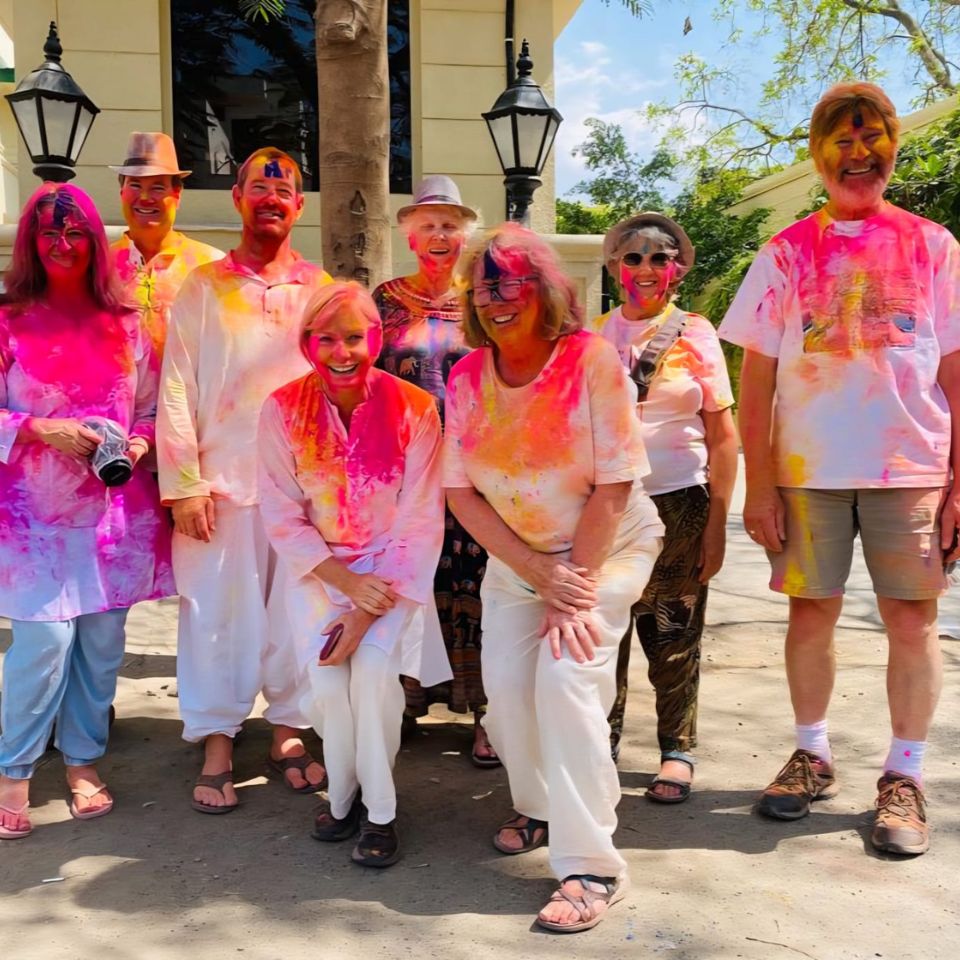
We go for early morning street photography. The Holi Festival takes place in the morning, so get ready by oiling your skin and hair, wearing old clothes, and taking nothing with you apart from your camera and a water bottle, tissues and some hand sanitizer. We will have chance to play Holi Festival with children and village people. After the village tour we will come back to hotel and have breakfast, then we will drive to Jaipur which will take 2 hours. We will join a private event to play Holi in safety in Jaipur. Afterwards, those who are more adventurous can give the raucous public event a try. In the evening we are going to visit GaltaJi temple where you we will see many monkeys. Later we will go to a restaurant to witness cultural dancing and music. Return to hotel.
Early morning we will leave for Jal Mahal (Water Palace) and then embarking on an exciting visit to the Amer Fort, a grand hill fort that was built by Raja Man Singh in 1592. Enjoying an elephant ride is an option to reach the entrance of the Amer Fort, situated atop a hill on the outskirts of the city. You will be amazed to see the beauty of the fort complex. It is a pristine example of Rajput and Mughal architectural styles and is made from sandstone and marble. The fort overlooks the entire Pink City and is declared a UNESCO World Heritage Site. The City Palace Complex is located in the heart of the city. This includes several courtyards, buildings, pavilions, gardens, and temples. The famous Govind Dev Ji Temple is located within this site. The City Palace was built by Maharaja Sawai Jai Singh II. The Hawa Mahal is one of the main attractions of Jaipur city tour. Built from red and pink sandstone, the Hawa Mahal was built in 1799 by the Maharaja Sawai Pratap Singh, the grandson of Maharaja Sawai Jai Singh, who founded the city of Jaipur. This 5 storeyed structure contains 953 small windowsknown called Jharokhas decorated with intricate latticework.
After breakfast drive to Agra. This afternoon we will go to visit Agra Fort. The Agra Fort (Qila Agra) is a historical fort in the city of Agra, also known as Agra's Red Fort. Mughal emperor Humayun was crowned at this fort in 1530. Later in the evening we will go to visit Taj Mahal from other side of Yamuna river. Dinner at the hotel.
In the early morning take a visit to the famous Taj Mahal. Enjoy the sunrise view of the Taj. Taj Mahal is a mausoleum built by Mughal Emperor Shah Jahan in the loving memory of his wife Mumtaz Mahal, after her death. It is one of the finest examples of Mughal architecture. This is why it is also described as the Symbol of Love. Built-in pure white marble, the beauty of the Taj Mahal will never fail to impress. The Taj Mahal is also the New 7th Wonders of the World. Return to the hotel and have your breakfast. After breakfast drive to New Delhi and to the airport for your departure to your home…………………
Deposit required to secure place: AUD 800 per person
Deposit required to secure place: AUD 800 per person
Join this unforgettable photography expedition through the royal heart of India.
Reserve Your Place